Weekly Picks

11 Kisses

Lovecraft Locker Update

Five Nights in Anime 4

Lovecraft Locker Full Version

SAKURA School Simulator

Lovecraft Locker 2

Omori Bad End

Lovecraft Locker

High School Simulator

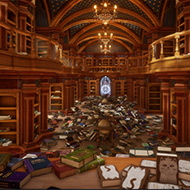
You pick up the first stray spellbook off a crowded shelf, glance at its category marking, and set it down two shelves over without thinking much of it, which is exactly the habit Librarian: Tidy Up The Arcane Library! quietly punishes once the collection grows past a handful of volumes.
| Genre | Organization Puzzle |
| Core Goal | Sort and arrange magical books by category |
| Known For | A relaxing start that turns into demanding logic puzzles |
Early sections of the game introduce simple placements, one category, one shelf, and the game rewards careful observation more than speed even at this stage. Many newcomers move books immediately without scanning the entire shelf first, which creates unnecessary rework once later placements reveal relationships between categories that weren’t obvious at a glance. Experienced players get in the habit of reading a shelf completely before touching a single book, because that upfront patience saves several rearrangements down the line.
Shelf forecasting becomes especially important once several categories start competing for limited space, and players who ignore it tend to hit the same late-stage mistake: a shelf that looks finished has to be rebuilt from scratch because there was nowhere left to put a book that showed up two categories later.
Terms like clean runs and perfect organization come up constantly in community conversation, and they typically describe solving a section with the fewest possible rearrangements rather than simply finishing it. Players chasing that kind of run frequently compare move counts and discuss more efficient layouts, and the vocabulary sounds simple on the surface but reflects genuinely deep strategic thinking once you dig into it. A debated aspect of the game is that some of the advanced puzzles feel surprisingly demanding compared to the calm atmosphere surrounding them, and while some players enjoy that contrast, others clearly prefer the gentler pace of the early sections.
One recognizable moment happens when a nearly complete collection reveals a single misplaced volume that forces a broader reevaluation of the whole arrangement strategy. It’s frustrating in the moment, but solving the resulting puzzle is consistently the part players describe as the most satisfying, since the game rarely hands you an easy fix once a collection has grown large enough to hide that kind of conflict.
Advanced players build mental placement maps before moving a single book, working out how each shelf interacts with the ones nearby before committing to an arrangement. That habit is essentially what shelf forecasting looks like once it’s fully internalized, and it’s the skill that separates players who breeze through larger collections from players who keep rebuilding the same shelf. Why do some finished-looking shelves suddenly need to be rearranged? Because limited space and overlapping category rules mean a shelf that works for the current set of books may not survive the next batch, and recognizing that ahead of time is one of the more valuable skills the game quietly teaches.
Librarian: Tidy Up The Arcane Library! succeeds because watching a chaotic pile of spellbooks fall into a clean, correctly sorted arrangement stays satisfying long after the early categories stop being a real challenge, and every shelf you get right the first time is proof that shelf forecasting paid off.