Weekly Picks

11 Kisses
Lovecraft Locker Update

Five Nights in Anime 4

Lovecraft Locker Full Version

SAKURA School Simulator

Lovecraft Locker 2
Omori Bad End

Lovecraft Locker
High School Simulator

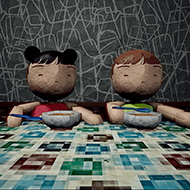
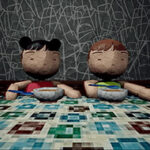
A six-year-old has to figure out dinner alone, and nobody in the household treats that as unusual yet. That single fact sits underneath every quiet hour in Family Secrets 1: Empty Plate, a first-person psychological horror game built around two siblings, Miko and Jun, waiting for a mother who isn’t coming back when she said she would.
| Genre | Psychological Horror |
| Perspective | First-person |
| Main Characters | Miko, Jun |
| Core Mechanic | Resource management and survival decisions |
The opening stretch of the game is deliberately soft. Miko and Jun are alone, their mother supposedly away at work, and the household routine still feels close enough to normal that players expecting an immediate jumpscare gallery are often thrown off by how long Family Secrets 1: Empty Plate waits before tipping its hand. The horror here builds through accumulation rather than a single scare: an overdue electricity notice slipped under the door, a fridge with a little less in it each morning, small chores that Miko has to handle that a child his age clearly shouldn’t be managing without an adult around.
Younger or newer horror players sometimes mistake that early calm for a lack of tension and put the game down too soon, which misses the point of the pacing entirely. The slow accumulation of small deteriorations is the horror, and the patience required to sit with it is one of the more divisive design choices the community discusses, since not everyone wants a horror game that takes its time the way this one does.
By the time you reach the first night section, the tone has shifted enough that the horror label finally makes sense. Story-focused players tend to slow down here, reading through dialogue and environmental notes for context about the father and the missing wallet money, while horror-pacing players just want to push through the dark rooms quickly to reach the next beat. Both playstyles eventually run into the same scripted moments, since the narrative doesn’t branch much based on how fast or slow you explore, though the slower approach tends to make the later reveals land with more weight because the small details accumulate instead of getting skipped past.
The household routine itself becomes a kind of clock. Bills pile up, meals get smaller, and Jun starts asking questions Miko can’t answer, and none of it is presented with a countdown timer or a warning icon. You’re simply expected to notice.
Several players specifically call out playing the night stretches without the flashlight on as more unsettling than using it, since the limited light forces you to navigate the apartment from memory rather than sight, turning a familiar space into something you have to second-guess at every doorway. The developer has acknowledged this player feedback directly, noting that removing or limiting the flashlight in a future patch could make the night sections scarier rather than less playable, which says something about how much the community’s instinct to go dark on purpose has shaped the conversation around the game.
For players newer to slow-burn horror, the lack of a typical chase mechanic or constant threat can feel uneventful at first, especially compared to faster mascot horror titles built around constant pursuit. Once the night sections compound with resource pressure, though, that absence of action becomes the point rather than a flaw, and the dread comes from helplessness instead of from being hunted.
One of the most discussed moments in the entire game involves Jun and a set of crayons that later connects to what the community has started calling the chocolate cake scene, a moment that reads as innocent on the surface but carries serious weight once the broader story clicks into place. It’s the kind of detail you only catch the significance of after finishing the game once, then replaying with the ending already known, watching the same crayon scene with completely different eyes the second time through.
The game does not soften this part for the player. Once Jun’s storyline reaches its breaking point, the contrast between the earlier cute, almost children’s-book art style and what that same art style is now depicting becomes the sharpest tool the game has. It’s also the part players disagree about most: some find the emotional gut-punch earns the buildup completely, others feel the cause-and-effect of Jun’s fate isn’t explained clearly enough on a first playthrough, leading to confusion rather than the intended heartbreak.
The dad’s role and what actually happened to the mother stay deliberately murky through most of the runtime. Players comparing notes in comments and Discord threads still debate whether the father’s disappearance with the household money implies something darker, since the game never states it outright and leaves the inference up to you. This ambiguity is one of the most frequently revisited topics in spoiler threads, with no single theory the community has settled on as definitive, and that lack of resolution is itself part of what keeps people talking about the game long after finishing it.
Players who first encountered Bad Parenting, an earlier game built around a similar premise, often draw direct comparisons to Family Secrets 1: Empty Plate, noting that both games use a child’s limited understanding of an adult crisis as their central horror device. Where Bad Parenting leans more into outright supernatural threat, this game keeps its horror grounded in poverty and abandonment, which several players consider the more emotionally effective approach even when it’s the less conventionally scary one.
Some players have also pointed out audio issues tied to licensing on certain music tracks, which has made streaming the game without sound problems a recurring topic in community discussions, separate from the story itself but still relevant for anyone planning to share a playthrough.
The game ties Jun’s fate to the crayon and chocolate cake sequence, which functions as a symbolic stand-in for something far less innocent than it first appears, and the broader poverty and neglect themes running through the household make the moment land harder on a second viewing once the full context of Miko and Jun’s situation is clear.
The narrative is largely linear rather than branching on player choice, so the ending depends more on story progression through Miko and Jun’s days than on specific actions you take during exploration, meaning a second playthrough won’t change the outcome no matter how carefully you manage resources.
The game implies the father took the mother’s money before leaving, but it never confirms what became of her afterward, leaving that thread intentionally unresolved for players to interpret based on the scattered notes and dialogue scraps found around the apartment.
Family Secrets 1: Empty Plate earns its discomfort the slow way, turning an empty fridge, a box of crayons, and a missing mother into a story that stays with Miko and Jun long after the final night section ends.