Weekly Picks

11 Kisses

Lovecraft Locker Update

Five Nights in Anime 4

Lovecraft Locker Full Version

SAKURA School Simulator

Lovecraft Locker 2
Omori Bad End

Lovecraft Locker

High School Simulator

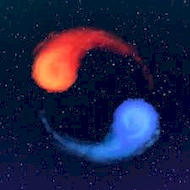
A Dance of Fire and Ice is a precision rhythm experience where every action must align perfectly with the beat. Players guide two interconnected spheres through evolving geometric paths, relying on timing, concentration, and pattern recognition. The simplicity of a single input contrasts with the deep challenge found in each carefully designed stage of A Dance of Fire and Ice.
At its core, A Dance of Fire and Ice focuses on synchronization between player input and musical structure. Each press advances the two orbiting spheres along a track, and every step must match the rhythm exactly. Unlike traditional action systems, there is no room for improvisation—only precision and consistency define success.
The early stages of A Dance of Fire and Ice introduce basic straight and curved paths, allowing players to internalize timing. As the experience progresses, players encounter shifts in tempo, angular movement patterns, and visually deceptive layouts that demand heightened focus.
Advancement in A Dance of Fire and Ice is structured around themed sequences of levels, each introducing new rhythmic ideas. These worlds gradually increase in difficulty, ensuring that players develop skill organically. Later stages combine multiple rhythm variations within a single path, challenging both memory and reaction speed.
Players often encounter segments that require immediate adaptation, especially when tempo changes occur mid-level. In A Dance of Fire and Ice, this unpredictability keeps each attempt engaging and mentally demanding.
Success in A Dance of Fire and Ice depends heavily on practice and rhythm internalization. Many players develop personal techniques to improve consistency. Some focus on counting beats mentally, while others rely on visual landmarks within the track structure.
Repetition plays a crucial role, as repeated exposure to difficult sections allows muscle memory to develop. Over time, patterns that once seemed overwhelming become predictable and manageable.
A Dance of Fire and Ice offers strong replay value due to its precision-based structure and increasing difficulty curve. Even completed levels can be revisited to improve timing accuracy or achieve flawless runs. Advanced players often seek additional challenges through custom patterns and modified sequences.
The appeal of A Dance of Fire and Ice lies in its balance of simplicity and depth. While the controls remain unchanged throughout, the complexity of rhythmic design evolves significantly. This ensures that each return to A Dance of Fire and Ice feels fresh, demanding renewed focus and discipline.
Ultimately, A Dance of Fire and Ice rewards patience and persistence, turning each successful completion into a meaningful accomplishment driven entirely by timing mastery and concentration.